
Evolution
Research into the holistic nature of organisms has large implications for the way we think about evolution. By appealing to mutation and natural selection, Darwinian evolutionary theory tends to “explain” (construct evolutionary stories about) the evolution of adaptive characteristics in isolation from the rest of the organism. One conceptually abstracts, say, horns or grinding teeth from the whole organism and interprets each as its own kind of “survival strategy.”
This approach, for all its suggestive power, has fundamental drawbacks. First, each characteristic of an organism has multiple functions, and it is largely arbitrary which one we focus on to construct our evolutionary story. Many such stories may well be tall tales. Second, the organism itself, as a distinctive unity in its own right, dissolves into an array of traits and becomes a kind of epiphenomenon. This approach to explanation turns out to explain away the organism itself.
As the anthropologist and historian of science Loren Eiseley points out,
Darwin’s primary interest [was] the modification of living forms under the selective influence of the environment... Magnificent as his grasp of this aspect of biology is, it is counterbalanced by a curious lack of interest in the nature of the organism itself... It is difficult to find in Darwin any really deep recognition of the life of the organism as a functioning whole which must be coordinated interiorly before it can function exteriorly.
A more adequate understanding of evolution requires that we first investigate the organism as a whole and how its members interrelate and interact within the context of the whole organism and its environment. This holistic understanding can then form the starting point for thinking about the evolution of the animal. The evolutionary biologist Dobzhansky’s famous statement that “nothing in biology can be understood except in light of evolution” is a grand claim that we believe, in the end, is true. But we have a lot of work to do before we get there.
By Stephen L. Talbott
Steve’s work on evolution, arising from ongoing research begun in 2009, aims to investigate the character of organisms as living, purposive agents, and to inquire into the radical implications of their agency for our understanding of evolution. These are matters that the conventional biological community, with its materialist and mechanistic biases, has been reluctant to explore, resulting in a highly distorted view of organisms and their evolution.
You can view Steve’s primary forum for these investigations in his online book (at our adjunct website):
Organisms and Their Evolution — Meaning and Agency in the Drama of Life
Currently, It includes more than 20 chapters that support the observation that the life and death of cells appears to be governed by the developing form of the whole in which they participate. Evolution has a living, well-organized, well-coordinated, well-directed character analogous to that of individual development
The following articles by Steve are also related to evolution:
“Natural Selection and the Purposes of Life”
Biologists have long rejected the idea of teleology, or purposiveness, in evolution, while claiming that the appearance of purposiveness in organisms is explained by natural selection. Steve examines the difficulties with this claim.
“Evolution and the Purposes of Life” (2017)
This is a slightly revised version of an article published under the same title in the Winter, 2017 issue of The New Atlantis.
“Evolution and the Illusion of Randomness” (2011)
The organism develops is an almost incomprehensibly organized, coordinated, and integrated fashion expressing the striving of the organism as a whole.

“Form and Color in the Animal Kingdom” (2009)
How to consider the lawfulness of form and pattern expressed across many different, distantly related groups of organisms occupying radically different environments.
Articles on Intelligent Design
“Why Can’t Biologists Quit Believing in Intelligent Design?” (2017)
To say that “natural selection did it” is just as much a refusal to investigate the actual life of organisms as to say “God did it.”
“Three Questions for Intelligent Design Theorists” (2014)
Steve seeks clarity on the decisive issue of contrasting “naturalistic” or “materialistic” forms of explanation with explanation acknowledging input from a designer.
“Biology’s Shameful Refusal to Disown the Machine-Organism” (2014)
This article does not explicitly discuss intelligent design, but it is directly relevant to the strong emphasis upon machine-like design among ID theorists.
By Craig Holdrege
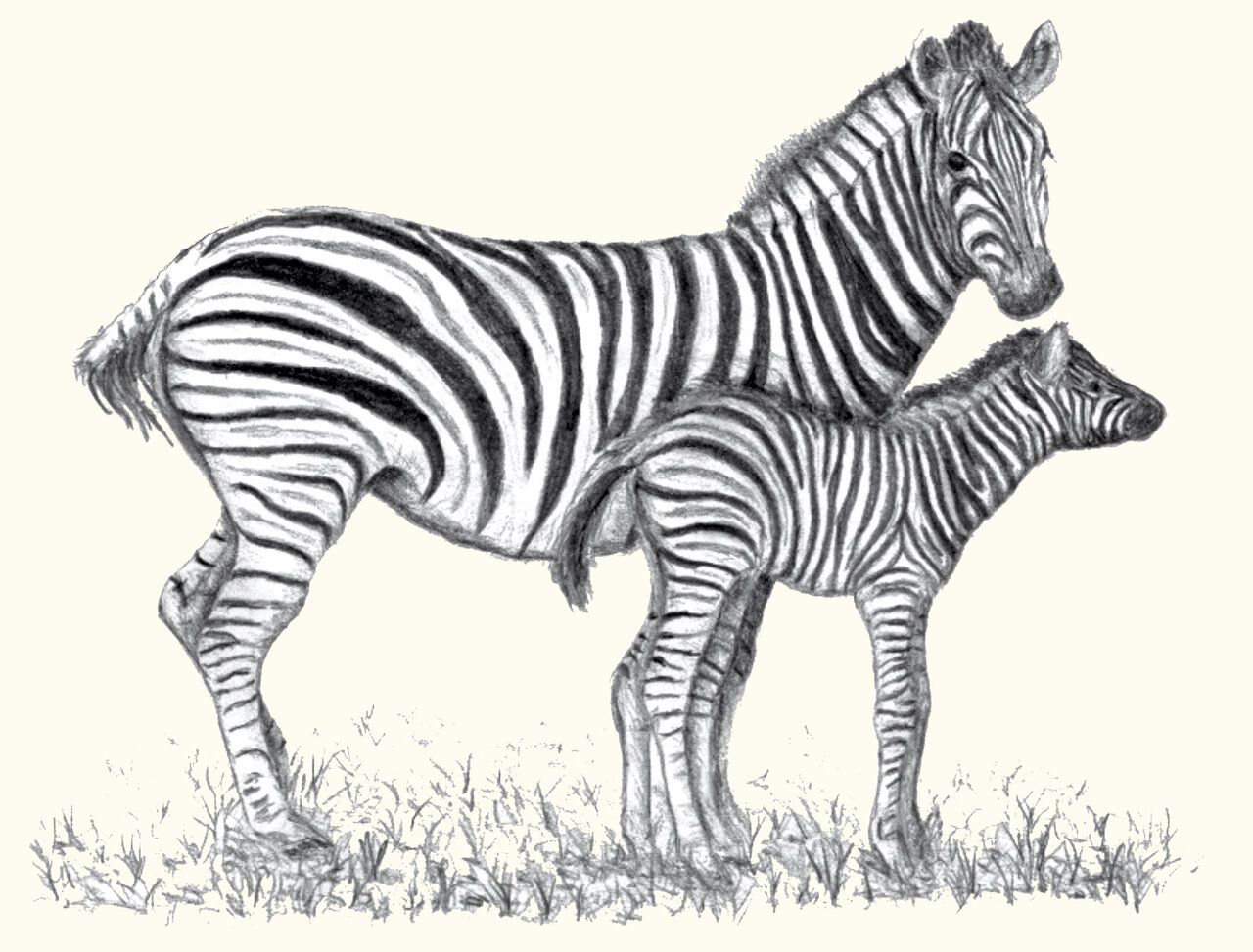
“Why Does a Zebra Have Stripes? (Maybe This Is the Wrong Question)” (2017)
For a very long while biologists have sought to explain why zebras have their dramatic, black-and-white stripes. Many different explanations have been offered, none of which have gained general acceptance. Craig reviews some of these proposed explanations, and along the way gives us an appreciation of the stripes in their own terms. Maybe that is not such a bad place to start.
Do Frogs Come From Tadpoles? Rethinking Origins in Development and Evolution (2017)
Through closely attending to the phenomena of amphibian development, Craig Holdrege shows that evolution is in reality a creative process, and not simply the inevitable product of biological “mechanisms.” The result is a concrete example of how one can begin to understand, as well as teach, natural science in a truly holistic and living way.
Diversity In Human Fossil History (2017)
A hands-on teaching kit on human evolution, designed to bring evolutionary teaching into closer correspondence with the available evidences, which are never as neat as the textbook theories might suggest.

The Giraffe’s Long Neck (2005)
This book provides a comprehensive picture of the giraffe’s biology and ecology and also discusses the complex and controversial issue of its evolution. It gives a unique portrayal of the giraffe while also exemplifying the Goethean approach to understanding animals and evolution.
“Goethe and the Evolution of Science” (2014) This article is based on a talk Craig gave in 2013 at the New York Academy of Sciences about Goethe and the relevance of his approach to modern science. From a Goethean perspective, the evolution of science depends on the metamorphosis of the human being.
“Evolution Evolving” (2009) This essay is based in part on the first of four talks on evolution that Craig gave at The Nature Institute in the spring of 2007. It was meant as one entryway into the topic of evolution, which was explored in greater depth and breadth in the ensuing three talks.
“Science as Process or Dogma? The Case of the Peppered Moth” (1999)
Craig has remarked that “We cannot expect to understand evolution until we understand the organism.” Given this fundamental truth, the student of evolution (as opposed to the student of the history of genes) will find essential the kind of whole-organism study that has been central to Craig’s scientific career. A collection of his studies can be found in the section of our website dedicated to Whole Organism Biology: A Goethean Approach.
By Ronald Brady
The late philosopher Ronald Brady, wrote a series of profound papers elucidating from a phenomenological point of view various aspects of evolution, while also clarifying some long-running confusions (such as that surrounding the idea of natural selection as a tautology — see the first article listed below). We have gathered many of Ron’s published papers together in the Ronald H. Brady Archive. Here are three of the papers you’ll find there:
“Dogma and Doubt” (1982)
When a theory becomes part of the common working knowledge of an entire community it becomes the context within which that community understands the world. Doubt comes to be regarded as something less than legitimate.
“Explanation, Description, and the Meaning of ‛Transformation’ in Taxonomic Evidence” (1994) Because natural history consists almost entirely of description, one would suppose biology to be the science that possessed the best account of this stage of science. Indeed biologists do take descriptive procedures for granted, both as ends in themselves and as steps toward the formation of classifications, which represent a higher level of description. Unfortunately, the importance of the stage is often eclipsed by that of explanation, with the result that the independence of description is compromised.
“The Global Patterns of Life: A New Empiricism in Biogeography” (1989)
In this review, Brady indicates the weakness in Darwin’s approach and examines the more recent developments which made that weakness apparent.