
Beyond Biotechnology — The Barren Promise of Genetic Engineering
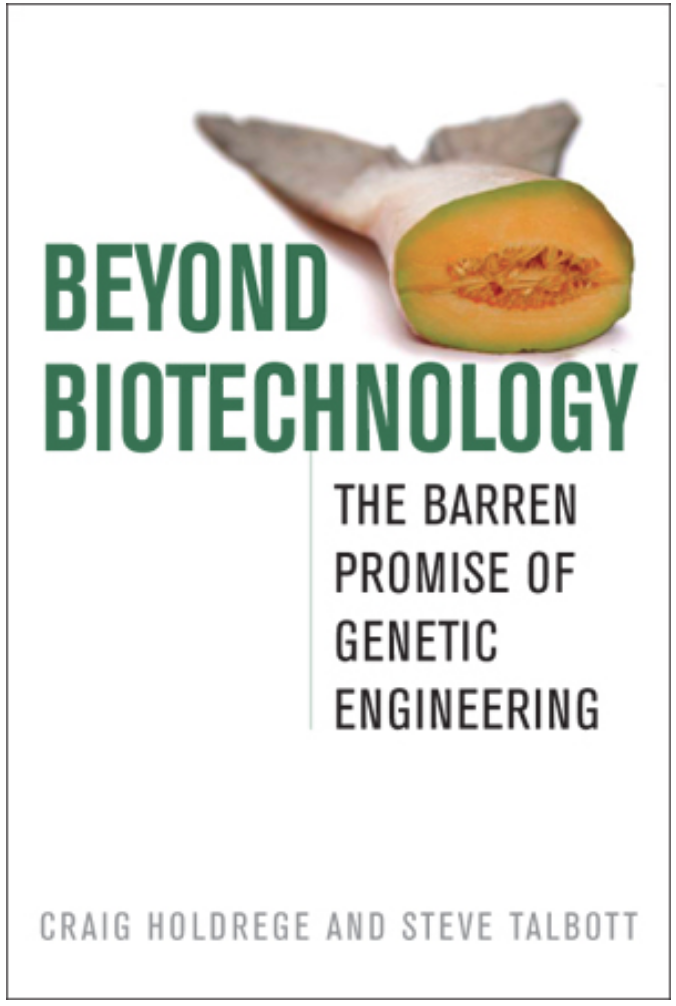
Beyond Biotechnology — The Barren Promise of Genetic Engineering
Craig Holdrege and Steve Talbott
Lexington, KY: University Press of Kentucky, 2008
(hardcover, 272 pages)
In 2001 the Human Genome Project announced that it had successfully mapped the entire genetic content of human DNA. Scientists, politicians, theologians, and pundits speculated about what would follow, conjuring everything from nightmare scenarios of state-controlled eugenics to the hope of engineering disease-resistant newborns. As with debates surrounding stem-cell research, the seemingly endless possibilities of genetic engineering will continue to influence public opinion and policy into the foreseeable future. Beyond Biotechnology: The Barren Promise of Genetic Engineering distinguishes between the hype and reality of this technology and explains the nuanced and delicate relationship between science and nature.
Authors Craig Holdrege and Steve Talbott evaluate the current state of genetic science and examine its potential applications, particularly in agriculture and medicine, as well as the possible dangers. The authors show how the popular view of genetics does not include an understanding of the ways in which genes actually work together in organisms. Simplistic and reductionist views of genes lead to unrealistic expectations and, ultimately, disappointment in the results that genetic engineering actually delivers.
The authors explore new developments in genetics, from the discovery of “non-Darwinian” adaptive mutations in bacteria to evidence that suggests that organisms are far more than mere collections of genetically driven mechanisms. While examining these issues, the authors also answer vital questions that get to the essence of genetic interaction with human biology: Does DNA “manage” an organism any more than the organism manages its DNA? Should genetically engineered products be labeled as such? Do the methods of the genetic engineer resemble the centuries-old practices of animal husbandry?
Written for lay readers, Beyond Biotechnology is an accessible introduction to the complicated issues of genetic engineering and its potential applications. In the unexplored space between nature and the laboratory, a new science is waiting to emerge. Technology-based social and environmental solutions will remain tenuous and at risk of reversal as long as our culture is alienated from the plants and animals on which all life depends.
TABLE OF CONTENTS
Preface
Part I: Genetic Engineering and Agriculture
1. Sowing Technology: Do We Really Want to Pit Agriculture Against Nature?
2. Golden Genes and World Hunger: Let Them Eat Transgenic Rice?
3. Will Biotech Feed the World? The Broader Context
4. We Label Orange Juice, Why Not Genetically Modified Food?
Part II: Genes and Context
5. Genes Are Not Immune to Context: Examples from Bacteria
6. The Gene: A Needed Revolution
7. Reflections on the Human Genome Project
8. Me and My Double Helixes
9. Logic, DNA, and Poetry
Part III: To Be an Organism
10. The Cow: Organism or Bioreactor?
11. The Forbidden Question
12. What Does It Mean to be a Sloth?
Part IV: Science Evolving
13. The Language of Nature
14. Delicate Empiricism—A Goethean Approach to Science
Acknowledgments
References
Index
REVIEWS
“Craig Holdrege and Steve Talbott's analysis of genetic engineering is the smartest, most original, and most compelling I have seen anywhere, in journalism or academia.”
— Michael Pollan, author of The Omnivore's Dilemma and The Botany of Desire
“The authors offer a refreshing style of scientific interpretation and have brought the discussion of the issues to a new level by making excellent use of current scientific findings that disclose how genes operate in vivo and by drawing on bioethical discussions.”
— Sheldon Krimsky, Urban and Environmental Policy and Planning, Tufts University